Friday, June 20, 2014

TJ Zaps the One-Upper...

TJ Zaps the One-Upper: Stopping One-Upping and Cell Phone Bullying
By Lisa Mullarkey, Illustrated by Gary LaCoste
Minneapolis, MN: Magic Wagon, 2013

This is a story about a 4th grade boy named TJ who is bullied by someone who he believed to be his friend- Danny. The story is all about what TJ does to stop Danny from one-upping and cell phone bullying. The author uses simple terminology and easy to understand phrasing to make the story fun and enjoyable for everyone. The illustrations are simple yet eye-catching and tell the story well. I enjoyed this book and would recommend it for children who are entering into the middle grades. It would be a good tool to use to help them understand bullying, its effects, and how to take action against bullying.

Reviewed by Lyndsey Jones

Thursday, June 19, 2014

Animal Classification

Animal Classification
By Jenny Fretland VanVoorst
Minneapolis, MN: ABDO Publishing Company, 2014

In this book, the author discusses how animals are classified and includes history and even tips for ways to remember the information that is included. She uses brief sentences and clear examples so readers can better
understand the information. The pictures of the animals are very colorful and there are also charts included throughout the book. This title would work well for children ages 9-13. It is educational and full of helpful tips. In addition, I love that the author provides websites with applicable games.

Reviewed by Christie Burkett

Climate and Weather

Climate and Weather
By Carla Mooney
Vero Beach, Florida: Rourke Educational Media, 2013

In this book, the author discusses factors that influence weather and climate. She uses simple sentences and the vocabulary words are made bold. These vocabulary words are then defined in a glossary at the end of
the book. The illustrations consist of photographs, diagrams, and charts. I think this book would be good for children ages 8-12. Also, the book would be great for those interested in science and weather. This title was educational and the information was useful in relation to the topic.

Reviewed by Christie Burkett


Horrid Henry

Horrid Henry
By Francesca Simon, illustrated by Tony Ross
Minneapolis, MN : Spotlight, 2013, Ages 6-9

This story is about Horrid Henry and different stories about his life. The main characters are horrid Henry and his brother Perfect Peter. The first story is about Henry trying to be perfect for the day. The other stories are about Henry being horrid while is brother is being perfect and how Henry tries to get his way.

The author uses alliterations to describe every person in the book who has a name:  Horrid Henry, Perfect Peter, Lazy Linda and Moody Margaret. The first line of the book illustrates the use of alliterations, "Henry was Horrid." And when his mother says, "Why can't you be perfect like Peter?"

The pictures in the book are done in pencil and are fun sketches. Pages 2 and 3 depict Henry and Peter perfectly. The pictures on those pages really help develop our imagination of what Peter and Henry would look like and how horrid Henry really is.

When I read this book I put myself in the mind of a fourth grader, and loved it! The book may have been fairly easy for a fourth grader to read, although it is still a book I would read to my students if I was teaching about alliterations. Henry is around the readers' ages and the readers should be able to understand not being perfect if they have a younger sibling. The readers may relate to doing an activity they do not like but are forced to go to, just like Henry. I cannot wait to read a few of the stories to my class to teach about alliterations.

--Reviewed by M.K.B.

Daisy's Defining Day

Daisy's Defining Day
By Sandra V. Feder, illustrated by Susan Mitchell
Toronto : Kids Can Press, 2013, Ages 7-10

Daisy's Defining Day is a story about a young girl who loves words. She loves to write new and fun words in a journal. One day a younger boy begins calling her Lazy Daisy. this upsets Daisy and she starts on a journey to create a new name using an alliteration, which is what she is learning about in school.

Sandra Feder uses alliteration and rhyming to catch the reader's attention. She also uses verbs like "groaned," "stomped" and "chanting" to help the reader visualize the action in the story. When Daisy was upset about being called "lazy," the author used this opportunity to again show the reader how amazing words can be and to use alliteration to engage the reader. One example is when she wrote:
To make herself feel better, Daisy turned to her favorite things--words. She thought about alliteration and tried to come up with words that not only started with the same letter or sound but also fit well together. Soon she had a list called "Perfectly Paired Words." "Bouncy Balls" and "Chunky Chocolate" were on the list along with "flying flags" and "summer sun."
I enjoyed reading this book. I believe it would be a good choice for students learning about alliteration. It could also be used to discuss inappropriate name-calling or even positive self-image. I believe that it showed Daisy as an empowered young girl who chose to not listen to the negative speech, but find her own positive words to describe herself. This would be a good book for children in 3-5th grade when many of these types of behaviors can be prevalent.

--Review by M.K.B.

Look on the Bright Side

Reed, Cristie. Look on the Bright Side. Vero Beach, Fla: Rourke Educational Media, 2013.


The story is about being happy and looking on the bright side during difficult situations.It explained what some feelings may be and why.

They make it so the child can think and relate to situations they have had and how they should feel or could feel.

Most of the illustrations are of children in various places looking happy. The children seem to be staying positive during activities.

This could be a great book for a student who has difficulties is certain situations. I would recommend this book for any young student  who may have depression or just needs a pick-me-up.

Age ranges to which his book would appeal: K to 3rd grade

Review: Stephanie, BGSU Student

Kevin's Big Book of Emotions

Slegers, Liesbet. Kevin's Big Book of Emotions. Clavis, 2013.

This story is about a boy named Kevin who explains his emotions. It is a very relatable book for young kids and kids with intensive disabilities.

The author's writing style is excellent for young students or older students with disabilities. 

The illustrations are very appealing and thoroughly explain what emotions look like in terms of body language. 

This book would be great to teach social skills to young children and children with a k-z cognitive ablities. I would teach this book with a bigger lesson on social skills and talking about how to treat others.

HK, BGSU student 

Good Manners with Your Teachers

Felix, Rebecca. Good Manners with Your Teachers. Magic Wagon, 2014.

The story is about being respectful towards teachers and why it's important. The book explains what good manners look like and what bad manners look like.

The writing style is very forward and to the point. There is little room for confusion.

The illustrations are a quirky and cute. There is little variation and it is simple.

The book is okay. Yes, I recommend it for kids of all ages because it is important for everyone to know the proper behavior at school.

Reviewer: SK; BGSU Student

Byrd & Igloo: A Polar Adventure

Seiple, Samantha. Byrd & Igloo: A Polar Adventure. Scholastic, 2013. 

This story is about a man and his dog racing to beat someone else to be the first to fly over the North Pole. The book is full of their adventures during their journey.

The writing style is very descriptive including a variety of vocabulary. The writing is engaging but not too confusing. 

Most of the photos are historic photographs and maps. The pictures include scenes from the North Pole, birds, boats, dogs, etc.

I liked this book because it's an interesting true story, which can be integrated with many other subjects. Yes, i recommend it for students looking to learn or to read for a class. Age ranges to which this book would appeal: 4th grade to 6th grade.

S.K., BGSU Student

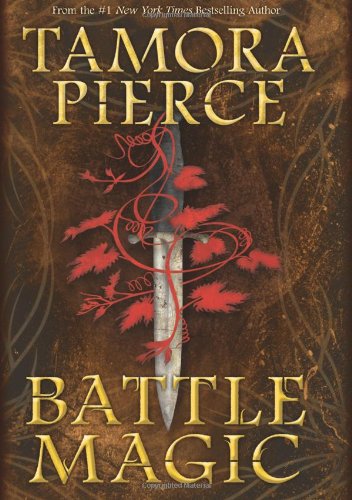
Battle Magic


Pierce, Tamora. Battle Magic. New York, NY : Scholastic Press, 2013.

This story is the continuation o he adventures of the characters in the Circle of Magic universe. This book follows characters Briar, Rosethorn, and Evvy as they journey through Evvy's homeland and encounter a cruel Emperor set on conquering the region.

The style of the book is one which is easy to sink into. When the point of view switches characters, the personality and thought processes of the character are conveyed through the writing. The story is able to shift through different times smoothly. Also, I loved the descriptions of magic in this series.

I wasn't thrilled by cover art of the copy I read.

I thought this book was an excellent continuation of a series I grew reading. It is a series I would recommend for any young fantasy readers. However, it should be noted that the later books contained more adult elements. This book includes war, torture, and a mentioning of romantic actions.

Age ranges to which this book would appeal: 14 to 17. 

Reviewer: MKB

Monday, June 09, 2014

A Very Witchy Spelling Bee

A Very Witchy Spelling Bee
By George Shannon, illustrated by Mark Fearing
New York : Harcourt Children's Books, Houghton Mifflin Harcourt, 2013, Ages 4-9

A witch, Cordelia, loves spelling and making spells so she enters a double spelling bee. 

The writing style is easy to read and playful.

The illustrations really make the book for me and really help make the read fun.


I loved this book and I recommend it to everyone! It's a great spelling book.


--Reviewed by Melissa Gear

You Make Me Smile

You Make Me Smile
Written and illustrated by Layn Marlow
New York:  Holiday House, 2013, ages 6-8

A very "warm" story about a young child getting ready to be reacquainted with a well-loved wintery friend. The writing style of this book is simple and easy to follow. The author uses good imagery to allow readers to immerse themselves into the familiarity of a fun snowy day.

The illustrations are cute, in addition to the little boy, they also portray a father figure who has a side story of his own that isn't included in the text. In fact he doesn't enter the story until the very end.

I think this would be a great classroom read aloud for a themed unit or for the winter season.

--Review by Jessica Lang

The Very Beary Tooth Fairy

The Very Beary Tooth Fairy
By Arthur A. Levine, Illustrated by Sarah S. Brannen
Scholastic, 2013, ages 6-9

This story was about a young bear, Zach, with a loose tooth. He is on a mission to find out if the tooth fairy will be a human, of whom his parents have warned him, or a bear. The bear's dialogue is cute. The mother growls at her cubs in an exasperated tone as they act like normal children do. I like that the author has personified the bears like people.

The illustrations do a very good job of telling the story. They are very detailed and show he characters' actions well. The technique is mostly pencil and watercolor.

I would recommend this book for a younger reader or an at-home read-aloud with parents. Maybe even a teacher who is talking about dental hygiene with younger students might find this book useful.

--Review by Jessica Lang

Rottweilers

Rottweilers
by Tamara L. Britton
Minneapolis, MN:  ABDO, 2013

This book teaches the reader everything there is to know about the dog breed Rottweiler. The author's writing style is very direct and factual. The more technical words are bolded to make sure the reader is expanding their vocabulary.

The photographs are of Rottweilers doing daily activities, and correspond to what the written information is about.

I enjoyed this book and would recommend it to anyone who is interested in learning more about the Rottweiler breed.

--Review by L. M.

The Tooth Fairy

by Anastasia Suen, Illustrated by Ed Myer
Vero Beach, FL:  Rourke Educational Media, 2013, ages 4 - 7

This story is about the process of losing a tooth and how the tooth fairy gets a hold of it. The author uses a lot of repetition to get the reader familiar with the words. The illustrations are simple, yet fun. There's not too much going on, but there's enough detail to help the story grow.

I enjoyed this book and would recommend it for younger children who are learning to read and missing teeth. There are sight words in the front, and comprehensive activities in the back.

--Review by L. M.

Friday, May 23, 2014

Goods Manners with Your Teachers

Good Manners with Your Teachers
by Rebecca Felix, illustrated by Gary LaCoste
Minneapolis, MN : Magic Wagon, 2014, ages 5-8

This story is about classroom manners and how to act in and outside the classroom.

The author writes in quick, easy to read sentences. They are easy to understand and listen to.

The illustrations are bright and nice to look at. The illustrations add to the story a lot.

This book would be great for the first day of school and I would recommend it to students that have a hard time with manners.

--review by Melissa Gear

Willow Finds a Way

Willow Finds a Way
By Lana Button, illustrated by Tania Howells
Tonawanda, NY : Kids Can Press, 2013, Ages 6-10

Willow is a young girl in a classroom full of students. One student, Kristabelle, is very bossy. Willow sometimes wants to tell her "no," however, she feels pressured to say yes. Willow sure enough finds a way to say, "no," and Kristabelle learns others will be her friend without demanding it of them.

In the text the author uses descriptive words for the reader to understand who in the illustration is who. An example of this is when the author writes, "Kristabelle skipped into the classroom holding a pink sparkly paper." When a child looks at the illustration they will look for a girl holding the paper.

The illustrations appear to look like freehand drawings. Many colors are used. Different colors for each character.

This would be a great book for discussing peer pressure with younger students. Parents and teachers can read this book with their child to explain these feelings are normal but stay true to yourself is the message in the end.

--review by Allison Wentling

A Very Witchy Spelling Bee

A Very Witchy Spelling Bee
By George Shannon, illustrated by Mark Fearing
New York : Harcourt Children's Books, Houghton Mifflin Harcourt, 2013, Ages 5-8

A Very Witchy Spelling Bee is about a little witch, Cordelia, who loves to spell. However, when participating in the spelling bee, she will be competing against a long-time champion. In the end, she beats the other witch and becomes friends with her.

The author uses bold purple letters to show when a character is spelling a word. I also like how when reading the section of the spelling bee words, the words rhyme.

The illustrations promote creativity & imagination. For example, the first page shows what a witch might appear to look like. The illustrations also go well with the text. An example is when the rules to the spelling bee are in anillustration for the reader to read.

This book is recommended for kids because after reading this book I would use it in my own classroom. This book is definitely meant for younger children (ages 6-8).

--reviewed by Allison Wentling

Facebook: The Company and its Founders

Facebook:  The Company and its Founders
by Ashely Rae Harris
Minneapolis, MN : ABDO Pub. Co., 2013, ages 12-18

This book is about how Mark Zuckerberg began the social media site of Facebook and helped it become one of the most known websites in the world.

Harris' writing style includes using strong transitions from paragraph to paragraph. She also uses very descriptive words that make this a good read.

The pictures in the book show what the Facebook website looks like and shows how young Mark Zuckerburg really is.

I strongly recommend this book to anyone who wants to learn about social media sites and how they operate, especially Facebook.

--review by B. W.

The Cruisers: Oh, Snap!

The Cruisers:  Oh, Snap!
By Walter Dean Myers
New York : Scholastic Press, 2013, ages 12-18

This story is about how some students at a middle school start a school newspaper called "The Cruiser." A photo in their newspaper stirs up some trouble and may force one of the students to rat the other out.

I enjoyed the author's writing style because it was very thought provoking and made me wonder what I would do if I was in the same situation as the students who created the newspaper were.

The illustration on the cover of the book gives the reader a good idea that this book is going to involve the people of  the newspaper somehow with all of the newspapers in the background.

This book is recommended to anyone who wants to read a story that isn't like a regular one. This story always had me wanting to know what will happen next from chapter to chapter. Overall:  great book!

--review by B. W.

Here Comes Trouble!


Here Comes Trouble!
By Corinne Demas, illustrated by Noah Z. Jones
New York : Scholastic Press, 2013, ages 6-8

This book is about a dog named Toby that doesn't like any type of cat. Toby's neighbors went out of town and their pet cat had to stay with Toby's family. Toby always got in trouble when Pandora (the cat) did something. At the end, Toby actually helped Pandora when she was stuck in a tree.

The writing style was predictable and composed in short sentences that had fairly easy vocabulary. The style was repetitive and easy to understand.

The illustrations went very well with the storyline. They conveyed the character's emotions extremely well. It was interesting how their were different sizes and shapes throughout the book.

Personally, I don't care for the book. I thought it was easy to relate to, but it was boring and the ending was aniclimactic. I would not recommend this book to other children.

--review by a BGSU student

Pete Won't Eat

Pete Won't Eat
By Emily Arnold McCully
New York : Holiday House, 2013, Ages K - 2

Pete won't eat the treat his mom made. He isn't allowed to go out and play until he eats his treat:  green slop.

The author keeps the writing short and simple but still enough to explain the situation and the consequence of Pete not eating the green slop. Children could read this book because the text is big, simple and short.

The pictures match the text. For pages that have a a few differences in dialogue or thoughts, there are illustrations for each different dialogue/thought to match that thought.

I recommend this book:  it is simple. It would be for starting readers. I think any book a beginning reader can read is great because it will give them confidence to keep reading and that they can read. This is exactly what this book does.

--review by BGSU student

The Granddaughter Necklace

By Sharon Dennis Wyeth. illustrated by Bagram Ibatoulline
New York : Scholastic Press, 2013, Ages 6-8

The story is about a necklace being passed down from generation to generation. This story is used in a way where the person can explain how long the necklace has been around. Aside from that the person who gets the necklace has to take care of it in order to give it to the next person.

The author brings past, present, and future history to this book. The author goes back seven generations with the necklace as a treasure and reminder of family. The importance of something so small grew so big from generation to generation.

The watercolor illustrations were warm and realistic. Some of the illustrations refleccted the necklace being given to the next generation at a significant time in their life.

I would recommend this book for other kids. This book could easily be utilized for both boys and girls due to the message of responsibility. Mainly, to ask a family member if they may inherit some kind of family heirloom or start a tradition of their own one day. This book can be the start of something beautiful in any family.

--review by A. W.


Wednesday, May 21, 2014

Exclamation Mark

By Amy Krouse Rosenthal, illustrated by Tom Lichtenheld.
New York : Scholastic Press, 2013, Ages 6-8

It is about an exclamation mark (punctuation) not fitting in with other marks. The exclamation mark realizes the difference in standing out and would like to be among what is considered normal.

The author is showing the difference in punctuation and how to use it in sentences. The author is vivid when the word STOP! is used by an exclamation mark from a question mark on the previous page asking too many questions.

The illustrations were boring and could have used color for the punctuation marks to show how each vary. The lined paper was nice to show the style for punctuation marks to be used.

I would recommend this book to other kids for an introduction or preview to a lesson. This book would work for kids that are beginning to write sentences and need help for how to end it. Although, there should be a title on the cover of the book as a reinforcer.

--review by A. W.

Thursday, April 10, 2014

Picture Book of Daniel Boone

Adler, David A. & Adler, Michael S.  Picture Book of Daniel Boone.  New York : Holiday House, 2013.

This book is about the life of Daniel Boone and how he progressed through his life from a young boy to a historical hero.  Daniel Boone would pioneer many to establish a wilderness trail and Daniel would eventually become political for his causes.  The book is short and gives little detail but does highlight the most important details in Daniel Boone's and his family's life.  Among them, historical events and conflicts of research.

The illustrations are amazing with great detail and life-like images.  The wild turkey looks almost like it is really standing there in front of the reader.  The images seem to have a realistic quality and not cartoon effects.  I would recommend this book.  I believe there is good historical information touched on.  The iamges really get the viewer the realistic point of view.  Kids aged 7 to 10 would be able to grasp this text.

SRB, BGSU student

Monday, March 31, 2014

The Beatles Were Fab (and they were funny)


Publisher: Boston : Harcourt Children's Books

This story is a timeline of different events during "Beatlemania". I love the Beatles and their music, but this book really taught me some of the things John, Paul, George and Ringo went through during this time.  This book talks about the good times and the bad times they went through.

The author's writing style is exceptional.  It's very informative but fun and enjoyable to read.  I loved the facts about their band name, song styles, and how the Beatles interacted with each other.  It was so interesting to read about the relationship between the four men and how they handled the fame.

I absolutely loved the illustrations.  Some of the pictures are pretty trippy which fits perfectly for this time era. The pictures are a great demonstration of the main points the book focuses on.  I really enjoyed looking at the pictures and the detail that is provided.

I definitely recommend this book to anyone young or old.  I can see myself reading this book to my future children so that they know about this great era of music.  I can also see myself reading this book to a classroom of high school seniors.  It's a great book with very cool information.

Reviewer: AZ


Willow Finds A Way


Button, Lana, and Tania Howells. Willow Finds a Way. Toronto, ON: Kids Can Press, 2013.

Willow's classmate, Krisabella, is throwing a fantastic birthday party that everyone wants to come to.  She makes the class eat lunch with her, wear pink, and play the games she chooses at recess or they can't go to her party.

The writing style is simple for younger students.  The book is easy to read.  It showed emotions and peer pressure for young children, but the overall situation would be better for teens.

The illustrations are very simple, all on white pages. The characters are drawn small but they match the text very well.

I think the birthday party scenario fits teens, not elementary students.  It reminds me of the competition for the best sweet 16 birthday party.  Also the actions Kristabella controls are one right after another - it doesn't build well. Willow leads the class to crossing their own names off the list which show s leadership and that a peer can't control you.  But, Kristabella's apology is subtle.  Overall the lesson could have been more powerful.

This book would appeal to ages 4-8

Reviewer: CH

Gone Fishing A Novel in Verse

Wissinger, Tamera W, and Matthew Cordell. Gone Fishing: A Novel in Verse. , 2013. 

Imprint: Houghton Mifflin


This story was about a young boy named Sam who cannot wait to go on a fishing trip with his dad until his younger sister gets invited to go along.  To make matters worse, his little sister, Lucy was catching fish, after fish, after fish.  Sam eventually catches a large catfish and Lucy calls him a hero.  Sam then feels bad for not wanting Lucy to come along and ends up very thankful for his family.

I loved the writing style in this book.  Each page is a poem from the perspective of Sam, Lucy, or their dad. Each poem follows the story line, but each poem is set up differently.  This book would be a great tool to use in the classroom to introduce or to review poetry.

The illustrations were great.  They were fun to look at but not distracting.  There was a picture for each poem which made this book fun and easy to read.  I loved the illustration of Lucy, especially! She definitely looks like the little sister I'd picture in my head.

Yes, I loved this book so much! I will read this to my future kids someday for sure.  I loved the little Fishing Prayer Poem.  It was so cute and made the book just perfect!  I really liked that Lucy was so encouraging for her older brother and Sam was humbled by the fishing trip.  It teaches kids valuable lessons as well as poetry.

This book would appeal to ages 4 and older

Reviewer: AZ


Monday, March 10, 2014

Lenny Cyrus, School Virus

By Joe Schreiber, illustrated by Matt Smith
New York:  Houghton Mifflin, 2013, 288 Pages, Ages 10-14

Lenny is a genius. And he has a crush on Zooey. Desperate to know how she feels about him and willing to try and change her mind from the inside, he discovers a method to shrink himself so that he can enter her digestive tract (via a capsule she unknowingly swallows). His plan:  get to her brain, see what she thinks about, and, if necessary, make her love him. All this happens on the day that Zooey’s new play, a Christmas themed zombie tale, is set to premier.

Told in first person from three perspectives (Lenny, Zooey, and Lenny’s best friend and co-conspirator, Harlan), the book charts the discovery of the shrinking process, Lenny’s experiences in Zooey’s body, and Zooey’s reaction to the foreign body as she frantically prepares for the play premier. The author does a good job of making the events of the day laugh-out-loud funny.

The illustrations for the book are much what one would expect for a chapter book aimed at grades 4-8. The kid characters appear to be white middle-class children, rendered in caricature. Bullies are appropriately stocky and big headed (also white middle-class children). Images of viruses, components of Zooey immune system, bacteria and hormones with faces and personalities help the reader accept the human-like interactions that Lenny has with them.

This book is recommended for readers interested in the human body and how it deals with disease. Oh, and for readers who enjoy off beat adventure stories. It was disappointing how little the Christmas horror play figured into the story, since it had great potential for hilarity.


Review by Jennifer Harvey, Head Librarian, Curriculum Resource Center, Jerome Library, BGSU

Wednesday, December 18, 2013

I Wish I Had...

Zobli, Giovanna. I Wish I Had....  2013, Eerdmans Books for Young Readers.

In this beautifully illustrated and written picture book, a narrator tells the readers of their desire to have attributes specific to different animals.  By taking this approach to looking at some of the qualities animals possess, the author manages to teach its reader about several different animals, as well as their habitats and practices.  For instance, Zoboli writes, "I wish I had the tail of a lemur to swing through the maze of branches..." (p.9) and "I wish I had the eyes of a blackbird to see every blade of grass growing in the meadow..." (p. 1).

Zoboli devotes two pages to each of the thirteen animals she highlights.  She wrote in a pattern that introduced two animals within each sentence in the form of, "I wish I had the (attribute) of a(n) (animal)...and the (second attribute) of a(n) (second animal).  Her writing style is very descriptive and contains a lot of imagery that only adds to the bold illustrations.  For example, Zoboli writes, "I wish I had the night-black coat of a panther as it slips through the darkness...and the far-reaching gaze of an owl, light as a ghost," (pps. 19-21).  Some of the descriptive phrases are rather dense and poetic, but this could serve as an introduction to symbolic writing styles for more advanced readers.

The illustrations created by Mulazzani are incredibly intricate and bold.  Relying on a combination of paint and pen, she creates vibrant illustrations with texture and depth.  Possibly the most effective illustration in developing the story is of the whale "singing as it crosses the wide ocean," (pps. 15-16).  The majority of the background is varying and textured shades of blue, with a row of houses and trees on the horizon in order to establish a scale upon which the reader may compare the size of the whale that is covering the majority of the page.  The large whale is covered in intricate and attention-grabbing pen drawings of various animals and plants.

To the reader, it may appear as if this book meets its artistic goals more than its educational goals; while there are some specific details relating to each animal, the dense and poetic writing style limits some of the clarity of the book.  This book was originally published in Italian and therefore the translation process may have robbed this book of some of its straightforward nature.  There is no attempt to define the narrator, which does not allow students the ability to connect to a character.  There is also no conflict, climax, or resolution within this story to provide its reader with an engaging story line.  Lastly, there is a giraffe featured on the front cover and "I wish I had the towering neck of a giraffe to reach up into the clouds" on the back cover, but the giraffe does not appear with the book, which is a bit misleading.  However, the illustrations and poetic writing style create a beautiful work of art that provides its readers with engaging artwork and an introduction to descriptive language, symbolism, and metaphors.

Recommended for ages 2-9

Katherine Franklin, BGSU student

Tuesday, December 17, 2013

Let's Visit Venice!

Manzione, Lisa.  Bella & Harry: Let's Visit Venice. 2011. Bella and Harry, LLC.

The book is about two chihuahuas that explore Venice, Italy.  They visit historical landmarks, experience different customs, and live the culture.  The author is informative, interactive, and enthusiastic and the illustrations are accurate, interesting, and fun to look at.

I love the Bella & Harry series!  I would recommend using this in a first or second grade classroom.  The information is subtly integrated into the story and learning is fun through Bella and Harry's adventure in Italy! It's a good introduction to Italian language and teaches geographical and historical contexts.

EmKAsh

Me Too!

Gorbachev, Valeri. Me Too! New York: Holiday House, 2013.

This story is about two characters named Bear and Chipmunk. Bear tells Chipmunk what he is doing, and Chipmunk always responds with a "Me too!" 

The author is simple and easy to understand. The language used is good for preschoolers.

The illustrations are cute and descriptive. They are good for pointing out what activity or objects surround Bear and Chipmunk.

I would recommend this book for preschool teachers to use. It contains only two pronouns used very consistently throughout the book, "me" and "you," setting a good basis for learning about pronouns. The theme is winter! Age ranges to which this book would appeal: 7 to 12. 

Reviewer: EmKAsh

Monday, December 16, 2013

Forest has a Song

VanDerwater, Amy L, and Robbin Gourley. Forest Has a Song: Poems. Boston: Clarion Books, 2013.


This story is composed of poems about nature, specifically in the forest. The writing style has a lot of figurative language such as alliteration, similes, metaphors, and repetition. An example of repetition is
"Puff!
I found one.
Puff!
It's plump."
There is transitions in punctuation as well as exploring emotions in context. The illustrations are colorful and painted with watercolors. The scenes are all nicely and cohesively set in nature.

I loved the poems in this book! They did a great job at capturing parts of nature. Children would enjoy hearing a story in a different way - poems! This book would fit nicely with Language Arts lessons and help jump start students' imaginations for their own poems. Children will relate to how nature is described in the poems and gain a new perspective. 

Reviewer: EmKAsh