Tuesday, December 10, 2013

The Lost Boy

Ruth, Greg. The Lost Boy. New York, NY: Graphix, an imprint of Scholastic, 2013. 

The story is about a boy who stumbles upon a mystery that no one has ever fully solved.  He follows a mysterious tape recorder that gives him clues that helps him in his attempts.  Going into places before, he will learn that he is is not only living in one world.
The author does not have to say much or use many descriptors in his writing because the pictures say it all.  His writing works well with the comic style book.

The illustrations are top notch.  They show emotion where it is needed.  The words that are different from the regular font helps the readers, read with different character voices and roles that are portrayed in the story. The best part are the black background pages because it clearly indicates it is a different story.

The book was different because not many people read books in comic book form.  The story was interesting and I did not want to put the book down.  I recommend it to kids who are visual learners because there are plenty of images, but just the right amount of reading.  There is one violent part part and one part that might scare children.  Anyone over the age of 11 should be ok.

Reviewer: Aaron Smart

Monday, December 09, 2013

Freaks

Larwood, Kieran. Freaks. New York: Chicken House/Scholastic, 2013.


This story is set in 1851 in London England.  The main characters are freaks in a show.  They try to solve the mystery of disappearing mudlarks because it seems like no one is going to do anything about it.
The author sets the story with the historical background of London in 1851. Then he layers his own creativity over top of it.  The writing is pretty simple but it is full of action and creative inventions and characters.
The cover is very eye catching.  And at the end of the book there are some black and white drawings of some of the characters, which is nice to have.
I would recommend this book to a child probably in the 4th to 7th grade depending on the reading level of the child.  If the child is interested in Victorian London they would love this book.  At the end the author includes some extra information on the time and place of the book.


Reveiwer: Edie Greaser

Under the Light

Whitcomb, Laura. Under the Light: A Novel. , 2013.


This book is about Helen, a ghost, needing a body so she could be with her beloved. Jenny was her host and James, the beloved, was with Blake.  The story goes on to explain how the ghosts intertwined Jenny and Blake's lives.

I feel that the author uses a lot of great detail, "She looks exhausted as she set her purse on a chair, but the next moment her eyes were sharp and she grabbed my arm with an iron grip, hushing me with a finger to her lips."  The details make the images come alive.  Also the initialized conversations between Helen and Jenny stick out.  
There is only the front cover.  It is a very whimsically done with a photo of a girl making a ripple effect in the water.  This photo is connected and creates a ripple on one another.
I would recommend it to other kids.  I feel this book is more suited for the upper range of middle level students.  The book is not difficult, however, the content is better for older students.  Ages 14-17 year olds.
Reviewer: Grace Mulvihill


See Me Dig

Meisel, Paul. See Me Dig. New York: Holiday House, 2013.


This story is about a group of dogs who likes to dig.  They find places to dig, only to be told to go away because the places they choose to dig is already occupied and they get upset.  In the end they find a place to dig.
The author's writing style is very simple.  Each sentence contains but a few words, not too complex.
The illustrations are nice and depicts the animal well.
I enjoyed the book.  I like the fact that the book is simple and that it repeats words.  Also, the images do well to match the story.  I would recommend this book to children, especially for those who have an interest in digging or in dogs.

Reviewer: Dakota Harris

The 14 Fibs of Gregory K

Pincus, Gregory K. The 14 Fibs of Gregory K. , 2013.

This book was about a boy who hated math.  The only thing that made it worse was that his whole family loved it...a lot.  His math teacher gives him a chance to bring up his grade, and this changed his life. Trying to follow in his father footsteps he enters a contest.  With the help of his math teacher, Mr. Davis, his best friend, Kelly, and some pie he finds out math isn't that bad.
The author's writing style is perfect for middle school aged kids.the words are understandable, and not to challenging.  The most important part of his writing is that he connects it to real life, meaning this can relate to any kid.
There are not many illustrations, but the cover says it all.  Math word and equations explain the math portion.  then with the poetry and words explain the writing portion of the story.
I thought that the book was great and there are many audiences.  Children who do not like math, children who do like math, and any kind of teacher.  For the kids it shows that any subject can be integrated together.  As for teachers, it shows them the same thing.  This can give teachers ideas on how they can incorporate math with any subject.

Reviewer: Aaron Smart

A City tossed and Broken: The Diary of Minnie Bonner

Blundell, Judy. A City Tossed and Broken: The Diary of Minnie Bonner. New York, N.Y: Scholastic, 2013.


My story is about a girl named Minnie Bonner and her family who owns a tavern in Philadephia.  The Sump family try to buy Minnie's father's tavern and Minnie has to move to San Francisco to live with the Sumps. Minnie's father disappears after his tavern is bought, which is when Minnie goes to California. She then survives the earthquake of 1906 and since the Sump's were rich she found a bag of cash, and becomes very rich. Minnie's life changed forever and she found out a lot about her tavern.

Judy Blundell's writing style is written in first person format.  Her writing is written more mysteriously, because we don't know what's going to happen next in Minnie's life.  A quote from the book "And as she said it the rumble started". This is mysterious because no one knew when the earthquake was coming.

The illustrations are very interesting because they are actually photos of what happened during the San Francisco earthquake.  It shows the fault and the aftermath the city went through, and this gives the reader a better idea of how/what/when the quake was.

I thought the book is a great read for middle grades, particularly 7th - 9th. It gives a lot of historical facts about America during the 1900's, yet, it's fictional.  The book is slow at first, but it becomes more interesting by the middle of the book. This may be a hindrance to middle grades because they want to be interested in something right away. 

Reviewer: Krista Kavalauskas


Friday, December 06, 2013

The Look

Bennett, Sophia. The Look. 2013.  Scholastic, Inc.

A high school girl in London, England named Ted Trout tries to navigate her way through the world of modeling.  Meanwhile, her sister is sick and fighting to stay alive.

The language used in the book keeps the reader engaged.  The author uses several references to popular culture, which makes the story more relatable.  For example, "I am utterly not Kate Moss" is one of many references made to celebrities throughout the book.

The only illustration used in the book is the cover.  The picture on the cover is a photograph representing the sisters in the story

I enjoyed reading this book.  It is well written and engaging.  I would recommend this book to high school girls, especially if they enjoyed reading the "Airhead" series by Meg Cabot or "My Sister's Keeper" by Jodi Picoult.

Hiding Phil

Barclay, Eric. Hiding Phil. 2013. Scholastic.

Three children find an elephant named Phil.  They bring him home to play but then realize mom and dad won't like him.  They hide him in many places, eventually mom and dad find out and ship him off, but finally let him come back to stay.

Barclay has geared this book to a young age and made all the thought processes so children can enjoy them.  It is fiction and kids enjoy fiction!

The illustrations are wonderful with a lot of colors and just enough detail.  The pages are not too overbearing and would be enjoyed by all ages.

I most definitely recommend this book to kids.  It is something they could read on their own and it is humorous.  Students PreK- grade 2 would enjoy reading this.

Samantha Ramkey, BGSU student

Monday, December 02, 2013

The Boy on the Bridge

Standiford, Natalie. The Boy on the Bridge. New York: Scholastic Press, 2013. 


A College student named Laura Reid studies abroad in Leningrad, Russia during the Cold War. Laura wants to get to know Russia better and she meets a Russian boy named Alyosha.  Laura gets to know more about Russia and the culture, but it is dangerous for Laura because she is American.  She becomes close to Alysha and he wants to come to America with Laura, but nowhere is safe for them because of the Cold War.
The author has written a romance between Laura and Alyosha. Natalie's writing is easily understandable as well and is very interesting.  She makes the story suspenseful because of the Cold War.  An example of her suspense writing is ...:she walked back to the dorm alone, just in case Ivan the guard happened to be looking out the window".
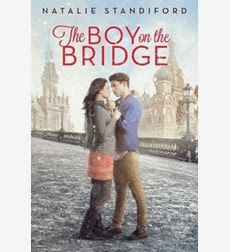
There are no illustrations within the book, so the reader has to imagine the illustrations.  The cover of the book does grasp the reader. The buildings in the background are beautiful and it looks like there is a lot of romance between the two people. So the cover of the book is watercolor.
I like the book.  It gives more insight on what it was like during the Cold War, with a twist of romance.  The romance adds suspense, which made me interested the whole time.  I would recommend it or older kids in middle grades because there is history involved.  I would give this book to ninth graders because they learn more about Russia in this grade. The only thing is that middle graders won't relate well to college students or romance well.

Reviewer: Krista Kavalauskas

Wednesday, November 27, 2013

Disaster Day

McKenzie, Precious. Disaster Day. 2013.  Rourke Educational Media.

This book is about the experience of two turtledoves attending flight school.  They are not the most skilled birds but they do work the hardest.  The author's writing style is very descriptive.  He uses unique words that transition well and bring the story together.  The illustrations in this book are very eye popping.  The colors were not extremely bright but they do serve their purpose.

I would not recommend this book to kids.  I find it kind of challenging at the beginning.  I believe most of the book is written for children but the beginning would be more for a student in a higher grade.  The author could have used a better choice of words.

Michael Lee, BGSU student

The Day My Mom Came to Kindergarten

Fergus, Maureen.  The Day My Mom Came to Kindergarten. 2013. Kids Can Press.

The story is about a student who is a Kindergartener experiencing the joys of being in school and mainly focuses on her mother's trouble of being away from her. The child invites her mother to class with her for an entire day.  The student is surprised her mother cannot follow rules and spends the day showing her mom how a Kindergartener should behave.

The writing style was comical, yet simple enough for a Kindergartener to understand.  The reading was not very difficult or lengthy.

The illustrator definitely brought the entire story to life and made the reading even more fun by seeing the characters- most importantly the mother- misbehaving and the daughter correcting her.

I would recommend this book as it was really fun to read and won't take much time at all to get its point across.  Many children might enjoy sharing this book with their parents or vice versa.  I think it would be appropriate for no older than first graders and maybe age 4.  Really great reading style even highlights words that could be used as vocabulary terms in a classroom setting.

Anonymous Reviewer

To London to Visit the Queen

Robertson, J. Jean. To London to Visit the Queen. 2013.  Rourke Educational Media.

Camp counselors Omar and Esme take their campers on an adventure to see the Queen in London.  After stopping at Piccadilly Circus to grab something to eat, they head to London to find the Queen.

The author is focusing on the "q" sound and words that begin with the letter "q."  She uses short sentences with simple vocabulary.  There was a word list at the beginning of the book that the students should know prior to reading.

The illustrations were nicely done and computer-generated.  The colors were bright and eye-catching.  The pictures followed along well with the story.  Specifically, I enjoyed the picture of the double-decker bus with Big Ben in the background.

Personally, I believe this book was very confusing.  I would not use this book in my classroom.  The author jumps around too quickly without supplying enough background information.  I am not sure how the students got to London or what Piccadilly Circus is.  The upside down writing in the storybook was extremely confusing as well.

Kimberly Campbell, BGSU student

Monday, November 25, 2013

Jack and The Hungry Giant Eat Right with My Plate

Leedy, Loreen. Jack & the Hungry Giant Eat Right with My plate. , 2013.

Jack's beans turn into a huge beanstalk which leads him to the giant's house where Jack and the Giant prepare a healthy meal together.

The author uses short sentences and many conversation bubbles.

The illustrations are very well created and the food pictures are very life-like. The photos are hand drawn with fantastic coloring.

This book does a very good job of illustrating proper food choices.  I like how the book begins with the familiar Jack and the beanstalk story line and then takes a turn in a completely different direction. I would highly recommend this book to all children regardless of age to teach them the importance of healthy eating.

Reviewer: Christina Hofelich

Vote for Me!

Robertson, J J, and Marc Mones. Vote for Me!Vero Beach, Fla: Rourke Educational Media, 2013.


Penelope Pony is helping to coordinate the class elections for the year.  The students make posters and help one another prepare their election posters.

The author used short sentences that were conversational based between the classmates.  An example sentence of the author's writing style is provided below.
"No you won't,Snyder.  With my long neck, I can reach it for you."

The primary medium for the illustrations I believe is animated characters that were computer generated. The illustrations were great representation of what the text was describing
. 
I would recommend this book to help demonstrate teamwork as well as to explain how to work together while "competing" against one another on something such as a class election.  I thought this was a great book and the illustrations went well with the text.
I would recommend this book for 7- 9 year olds.

Reviewer: Brittany Scott


Ukulele Hayley

Cox, Judy, and Amanda Haley. Ukulele Hayley. , 2013.

This story is a about a third grader named Hayley who was unsure of her talents.  Shortly after, Hayley bought a ukulele and fell in love with playing it and even started a school "uk" club, planned concerts, and saved the music program!

Judy Cox's writing style is unique.  She tells the story as if you were there.  She writes and uses words easy enough for middle schoolers to understand and be engaged.

The illustrations are very relevant to the important parts of the book.  They are eye-catching and match perfectly to the text.

I enjoyed reading this book!  I think the message of this book will grasp it's reader's attention.  I would recommend this book to kids if they enjoy music and fiction. This will be appropriate for ages 9-12 year olds.

Reviewer J.W.

Hunter Moran Hangs Out

Giff, Patricia R. Hunter Moran Hangs Out. , 2013.

Zach and Hunter are twins from a rather large family and when a neighbor girl tells them she heard of a possible kidnapping that is going to happen, they take charge. The twins have only four days until their summer is over so they work hard to find the kidnapper before he strikes.
The writer does use some words that would take some thought to understand it's context.  One word in particular that I noticed was, accomplice.  This word was important to the plot since it is a mystery.  The author used it when she wrote, "No, the accomplice isn't here."
There were very few illustrations within the text.  The ones included in the book created anticipation for the upcoming setting written in the following chapters. These illustrations where mysterious and effective in setting the mood and scene throughout the chapters.
I think that this book has a great story, flow, and plot but I think that the description of the Moran family in the first few chapters is lacking.  This would be a book of recommendation for kids ranging from 9-12 years of age. I think that both boys and girls could enjoy this story.

Reviewer: B.N.T

Tuesday, November 19, 2013

Danny, Who Fell in a Hole

Fagan, Cary, and Milan Pavlovic. Danny, Who Fell in a Hole. Groundwood Book, 2013.

This story is about a boy Danny Diamond who comes home one day to find out that his parents taking jobs in two different cities across the U.S. In a wave of emotion Dave runs away and falls in a hole. With only his backpack, e must survive until he is found.

Fagan's writing style is interesting. While it is at a proper level for his audience, it also includes some adult concepts (i.e. on pg. 79 it mentions moonshine, or moleshine in reference to one of the characters). It also includes some complicated concepts with parents (they can be a little harsh and selfish) which could be troubling for this age group to understand.

The illustrations are not on every page, may one every couple chapters, and they are hand-drawn with a pencil. The illustrations are helping in developing the story and are suitable for the age group. All of the illustrations aid the reader in creating a mental picture of the characters and what is happening throughout the story. 

I think this is a pretty good book for its intended age group. It is a transition from picture books to chapter books and provides a good range of vocabulary. I don't think I would give the book to anyone over the age of 12 because it is no suitable or challenging for that age. I think this would be good for any student because it does not play to specific interest. Overall, I would recommend this book to others and students, but I would keep in mind the more complex ideas that are introduced. 

M.L.W., BGSU Student

Are the Dinosaurs Dead, Dad?

Middleton, Julie, and Russell Ayto. Are the Dinosaurs Dead, Dad?, Peachtree Publishers, 2013.

This story is about a father and his son at the museum. The father was explaining all about dinosaurs, and the son kept saying that the dinosaurs are alive and doing different things. The father would say that it was just the son's imagination. Then they come to the T-Rex, and something happens ...

The author uses pretty much the same sentence structure and style throughout the entire book. The thing that I noticed the most were the dinosaurs names. They were written a little bigger than the other words. "You see, Dave," said Dad knowledgeably, "That dinosaur there is the Deinochirus. It has some of the longest arms of all the dinosaurs."

The illustrations appear as if they are water color paintings. I believe that the most impressive paintings are the images of the dinosaurs. They all take up two pages, so they are the focal point of each page.


This was a very cute book. It had colorful pictures, as well as a cute story. I would recommend this to other kids, especially kids who are interested in dinosaurs. I think that this book would appeal to kids between the ages of 3 to 5.

Jordan Scanlan, BGSU Student

Monday, November 18, 2013

Twelve Kinds of Ice

Obed, Ellen B, and Barbara McClintock. Twelve Kinds of Ice. Boston: Houghton Mifflin Books for Children, 2012.

A family who waits all year for the perfect ice conditions. This story takes you back through the different stages of winter to the point where there are perfect conditions for a community to come together and enjoy the ice.

The author's writing style is simple and breathe taking.  When the author writes, "Silver blades, silver speeds, silver sun," the reader is able to connect the text and feel what the children are feeling as they skate on the ice.

The illustrations in the book help the reader to visualize how the family works together to get true enjoyment out of every change in ice that comes throughout the winter.

In my opinion this book is a great story for an older sibling to read to a younger on at the beginning of winter. The whimsical pictures and descriptive words would make any child excited for winter weather. 

Age ranges to which this book would appeal: third grade to fifth grade.

E.R., BGSU Student

Wednesday, November 13, 2013

The Cruisers: Oh, Snap!

Myers, Walter D. The Cruisers: Oh, Snap! Scholastic Press, 2013.


This book is about a group of students who run a competing newspaper and attempt to find breaking stories. They also find some trouble along the way.

The author writs in an engaging way. I was never bored once while reading. I kept waiting and anticipating what would happen next.

There were no illustrations in the book, but there were excerpts from the newspaper the students wrote. It made you feel like you were there with the characters.

I really enjoyed this book because it kept my attention the whole time! I would recommend this book to my students. I think the book would be best for ages 10 to 14. Students who have interest in journalism or creative writing would enjoy it.

Alden Carney, BGSU Student